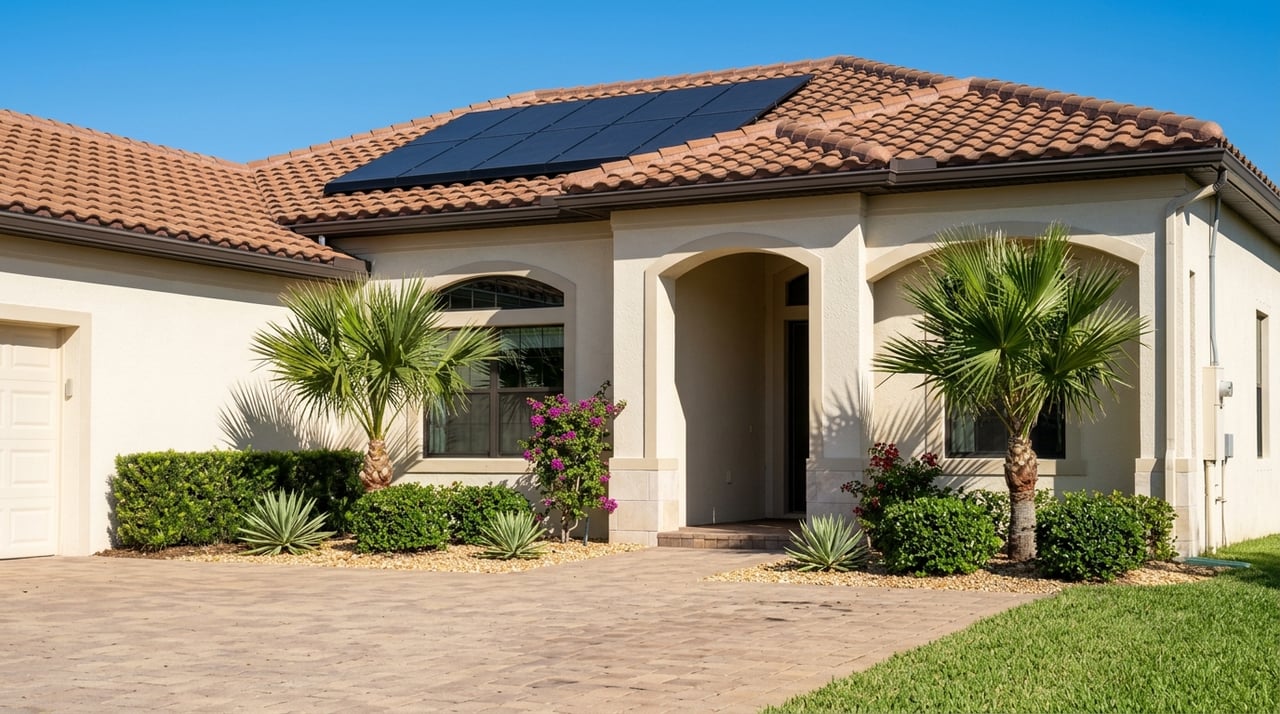
Polo Run Lakewood Ranch Solar Lifestyle Explained
Theresa DiNapoli July 9, 2026
Theresa DiNapoli July 9, 2026
Curious whether Polo Run’s solar lifestyle is a real day-to-day advantage or just a catchy feature? If you are comparing Lakewood Ranch communities, that is a smart question to ask. Polo Run stands out because solar is built into every home, but the bigger story is how that feature fits with monthly costs, amenities, and the overall Lakewood Ranch lifestyle. Let’s break it down so you can decide whether Polo Run matches the way you want to live.
Polo Run is located along the eastern SR 70 corridor in Lakewood Ranch in Manatee County. Current community materials place the entrance about 1.5 miles east of Lorraine Road, which helps when you are comparing access points to other villages in the area.
Lakewood Ranch describes itself as a 35,000+ acre master-planned community spanning Manatee and Sarasota counties. Within that larger setting, Polo Run is known as Lennar’s first solar village, which gives it a distinct identity among Lakewood Ranch neighborhoods.
Official map materials place Polo Run in the single-family, entry-to-mid price segment, with homes described from the $400s to $500s. That price positioning can be helpful if you are narrowing your search between villages with different amenity packages and fee structures.
The biggest headline in Polo Run is simple: solar is standard, not optional. Current Lakewood Ranch materials say every home includes energy-saving solar technology along with smart-home features.
That matters because solar is part of the everyday ownership experience here, not an upgrade added to only a few homes. If you are specifically looking for a home where energy efficiency is already built into the package, Polo Run offers that starting point.
The practical benefit of rooftop solar is that it may reduce your electricity costs. The key word is may, because no public source for Polo Run provides one universal savings number for every home.
Your actual results can depend on the property, your household’s energy use, and the details of that specific solar setup. In plain English, solar should be viewed as a factor that can lower variable electric expenses, not as a promise of a zero electric bill.
Older marketing materials used stronger language about how much energy solar could offset, but current official materials use broader wording. For buyers today, the safest takeaway is that solar is included and can support lower electricity use from the grid, depending on how you live in the home.
For many buyers, the appeal of Polo Run is not only the solar component. It is the combination of a newer Lakewood Ranch setting, built-in energy-saving technology, and community amenities that support an active Florida lifestyle.
Current materials specifically mention a pool, sports courts, and dog parks. Public listing data also shows HOA coverage that may include community pool access, grounds maintenance, management, private roads, and recreational facilities.
That means your day-to-day experience is likely to be shaped by both your home and the neighborhood structure around it. Instead of focusing only on the power bill, it helps to look at the full ownership picture.
One of the most important things to understand about Polo Run is that solar does not replace all other community-related costs. Buyers should plan for both HOA fees and district assessments.
Manatee County budget materials for the Lakewood Ranch Stewardship District include Polo Run, confirming that district assessments are part of the carrying cost. Those same county materials note that the district assessment per EDU is grossed up by 7% when placed on the property tax bill.
Public listing examples show that the association side of ownership costs is not identical from one property to another. Based on current examples, a realistic planning range for combined HOA and district assessment costs is roughly in the high $400s to about $600+ per month.
Here is a simple way to think about it:
If you are financially minded, this is where Polo Run gets especially interesting. Part of the monthly housing spend may shift away from higher utility use and toward HOA and district-related costs.
That does not automatically make Polo Run more or less affordable than another community. It simply means you should compare the full monthly picture, including mortgage, property taxes, insurance, HOA fees, district assessments, and likely utility usage.
This is often the smartest way to evaluate a solar community. Instead of asking, “Does it have solar?” the better question is, “How does the total monthly ownership cost compare with my alternatives?”
Many Lakewood Ranch villages offer strong amenity packages. Across the master plan, village comparison materials show categories such as clubhouses, pools, fitness centers, lifestyle directors, gates, dog parks, golf, tennis, pickleball, dining options, age-restricted living, and maintenance-included options.
So Polo Run is not unusual simply because it has amenities. The standout feature is that the homes themselves include solar as a standard feature.
That distinction matters when you are comparing Polo Run with a non-solar village. Another neighborhood may have lower HOA dues, but potentially different utility patterns and a different overall ownership equation.
If you are trying to decide whether Polo Run fits your goals, use a side-by-side comparison. This can help you stay focused on real ownership costs rather than just headline features.
When you look at Polo Run through that lens, the value conversation becomes clearer. You are not just buying solar panels. You are choosing a community structure, an amenity package, and a monthly cost profile.
Polo Run can be especially appealing if you want a Lakewood Ranch single-family home in a community where energy-saving technology is already included. It may also fit buyers who like the idea of pairing solar features with a resort-style neighborhood setting.
For relocators, the concept is often attractive because it feels simple. Instead of figuring out whether to add solar later, you are looking at homes where that feature is already part of the package.
For cost-conscious buyers, the key is balance. The potential electric savings may be appealing, but the right decision usually comes from reviewing the whole monthly budget, not just one line item.
Before you make an offer, it helps to get specific about the home and the cost structure. A good review upfront can make your decision much more confident.
These questions help you move from general community marketing to the actual numbers tied to the home you are considering. That is where clear decision-making starts.
Polo Run offers a compelling mix of Lakewood Ranch lifestyle and built-in solar technology, but the best fit comes down to your priorities. If you want an amenity-rich neighborhood where energy-saving features are standard, it deserves a closer look. If you want help comparing Polo Run with other Lakewood Ranch villages in a practical, numbers-first way, Theresa DiNapoli can help you sort through the options with clarity and confidence.
Stay up to date on the latest real estate trends.
Theresa DiNapoli can relate to any situation in any environment with anyone and has a great eye for staging. Get assistance in determining the current property value, crafting a competitive offer, writing and negotiating a contract, and much more. Let Theresa DiNapoli be your one-stop to paradise.